Choosing the Right Custom Playmat for Tournament Play
Stitched edges, rubber thickness, surface texture. Here is what actually matters when picking a playmat that survives a full season.
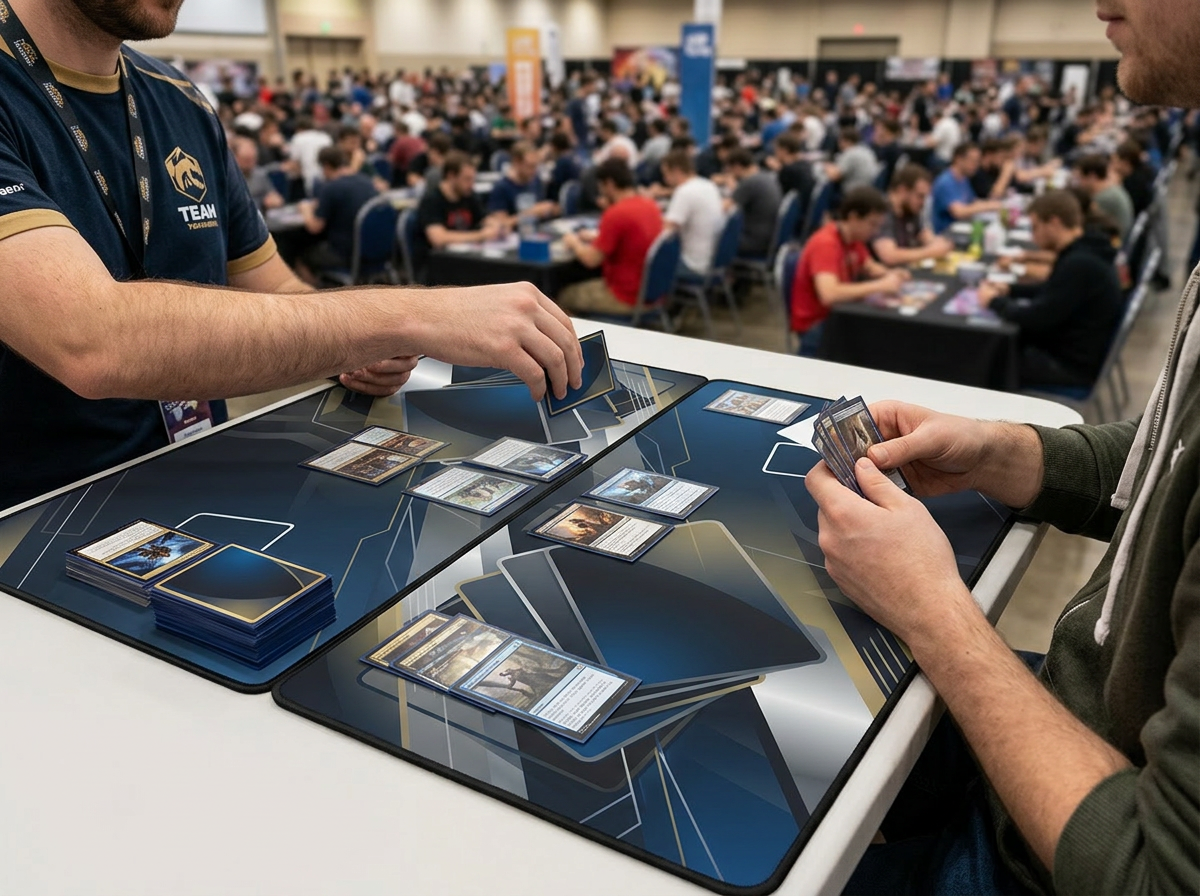
Playmats look like a simple purchase until you own a bad one. Thickness, surface finish and edge construction all change how a mat plays and how long it lasts, and they matter far more than the artwork does.
Thickness
Thin mats travel well and roll small, but they telegraph every crumb on the table. Thicker rubber gives a softer shuffle and hides an uneven table surface, at the cost of a bulkier roll.
Surface finish
A smooth cloth surface lets cards slide, which is faster for picking up hands but less forgiving on a sloped table. A slightly textured finish grips sleeves, which suits games with lots of tapping and rotating.
Edges
Stitched edges are the single best indicator of a mat that will last, because the seam stops the cloth layer lifting from the rubber. An unstitched mat usually starts peeling at a corner within a season of regular use.
Size and legality
Standard mats suit almost all one-on-one play. Larger table mats are great for multiplayer nights but many events restrict the footprint, so check the format rules before ordering an oversized mat for competitive use. Rocky Mountain Cards prints standard sizes as the default for exactly that reason.
Custom gear printed for Colorado players
Playmats, sleeves, deck boxes, binders and slab labels, all printed from your own artwork with a human resolution check before it goes to press.